Messina: A Haven for Geniuses, Heroes, and Immortals
C'è un filo invisibile che lega la luce, la scienza e il coraggio: passa tutto da qui, dallo Stretto di Messina. In questa pagina vogliamo raccontarvi la città attraverso gli occhi di chi l'ha vissuta, amata e resa eterna.
Vi racconteremo di come Dicearco e Maurolico abbiano guardato questo orizzonte per disegnare le mappe del mondo antico e moderno. Vi mostreremo i colori che Antonello ha rubato al nostro cielo e il realismo crudo che Caravaggio ha trovato nelle nostre strade. Rivivrete l'assedio in cui le urla di Dina e Clarenza salvarono la città dalla distruzione.
Tante storie, un unico scenario: Messina. Buon viaggio nella città dello Stretto.
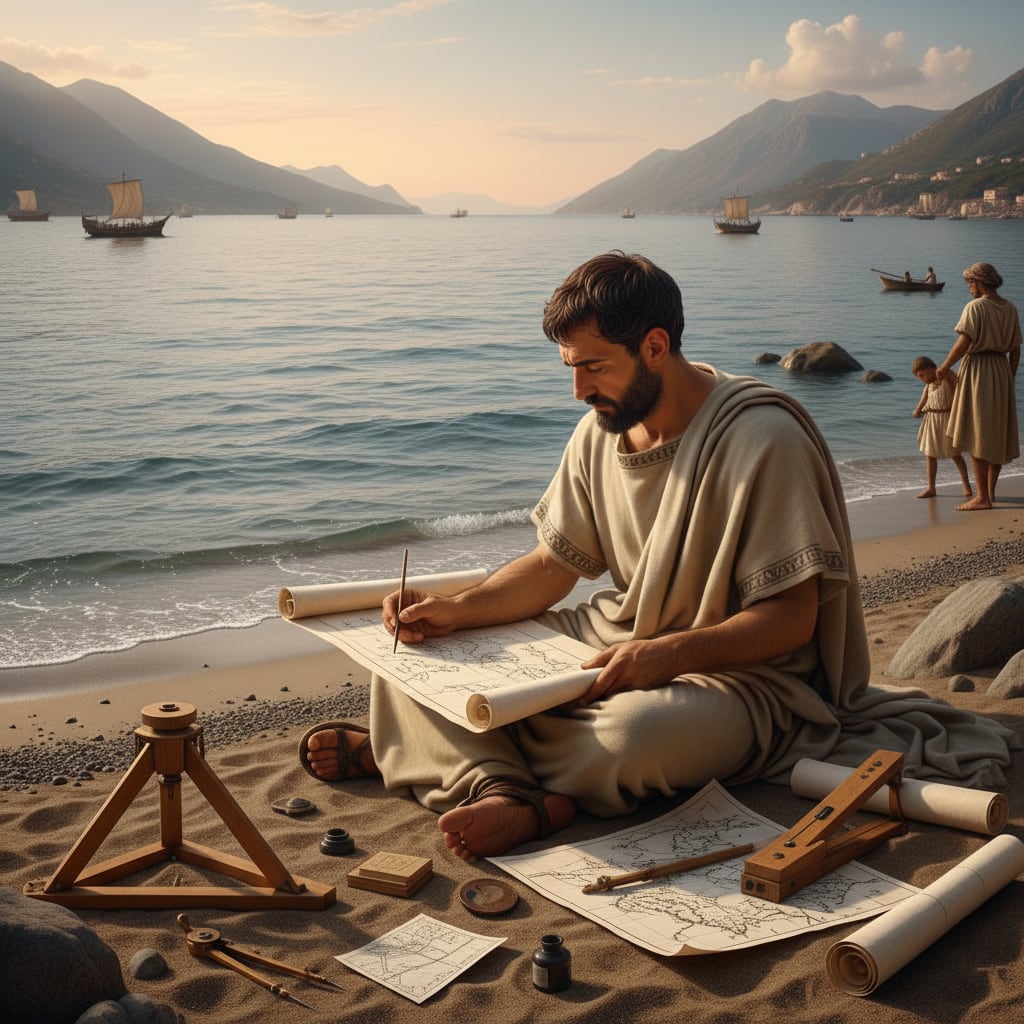
Dicearco of Messina.
Pioneer of scientific cartography, was a visionary philosopher and geographer who transformed the way humanity understood both itself and the world. Born in Messina in 350 BC and educated in Athens as a disciple of Aristotle, he rejected blind fate in favor of human reason, responsibility, and ethical balance, advocating respect for all living beings and a practical approach to life. A tireless scholar and traveler, he spread Aristotelian thought in his hometown and left a lasting mark on philosophy, politics, and geography. His greatest legacy lies in cartography: he was the first to introduce a system of latitude and longitude, dividing the Earth into meridians and parallels long before Eratosthenes, and he even traced the main parallel through his beloved Messina. Measuring mountains, estimating the Earth’s circumference, and mapping the known world from the Pillars of Hercules to the East, Dicaearchus placed Messina at the very heart of the ancient world, making the city not just a crossroads of the Mediterranean, but a point of reference for human knowledge itself.
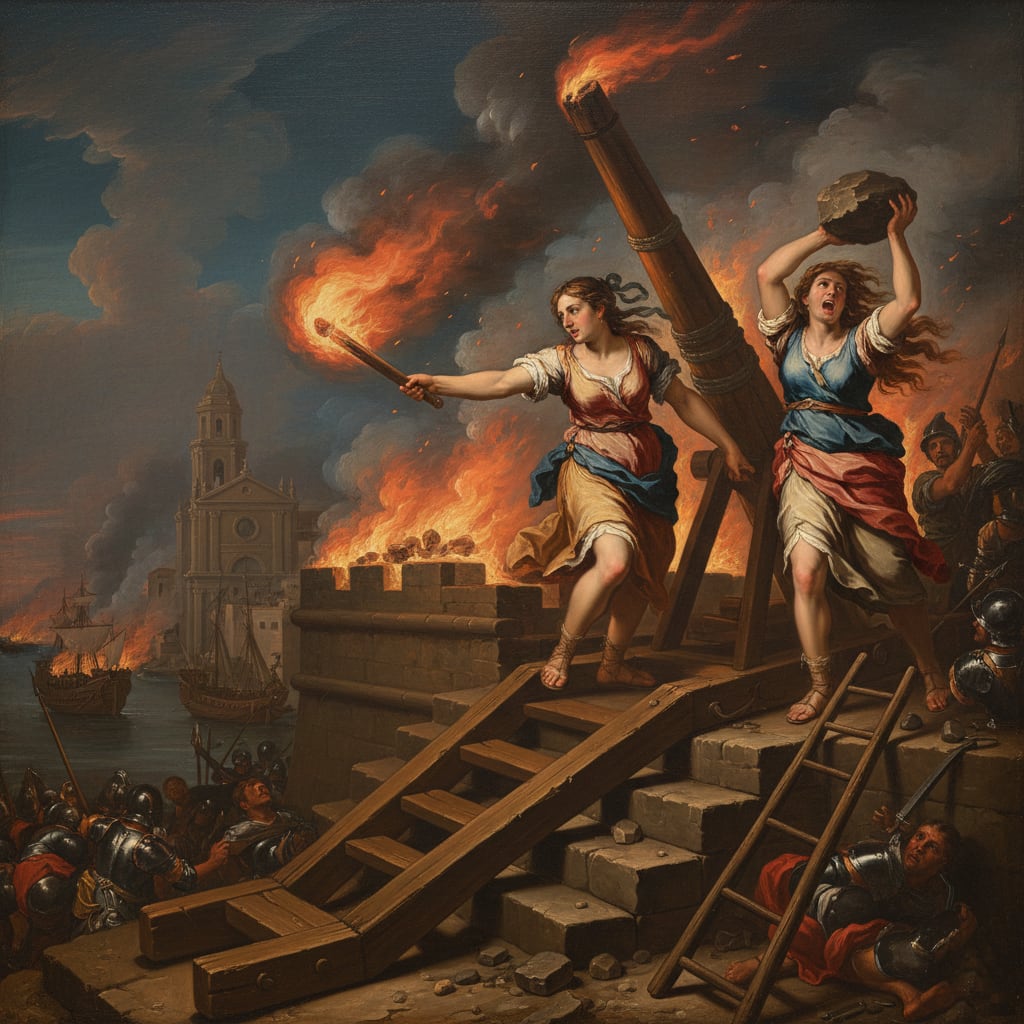
Dina and Clarenza.
The legendary heroines of the Sicilian Vespers, embody the fierce and proud soul of Messina, a city that has always known how to defend its freedom. Their story lives on in the great astronomical clock beside the Cathedral, where their towering figures still ring the bells, reminding visitors of courage born on these walls. In 1282, during the dramatic siege led by Charles of Anjou, while Messina was surrounded by a vast army, its women stood alongside the men, carrying stones, guarding the walls, and even taking up arms. On a decisive August night, Dina hurled massive rocks against the attackers while Clarenza rang the alarm bells, awakening the city and calling its people to arms, turning the tide of battle and saving Messina from conquest. Celebrated by chroniclers, poets, artists, and popular legend, Dina and Clarenza are not only historical figures but eternal symbols of resilience, collective strength, and the indomitable spirit that still welcomes travelers to Messina today.
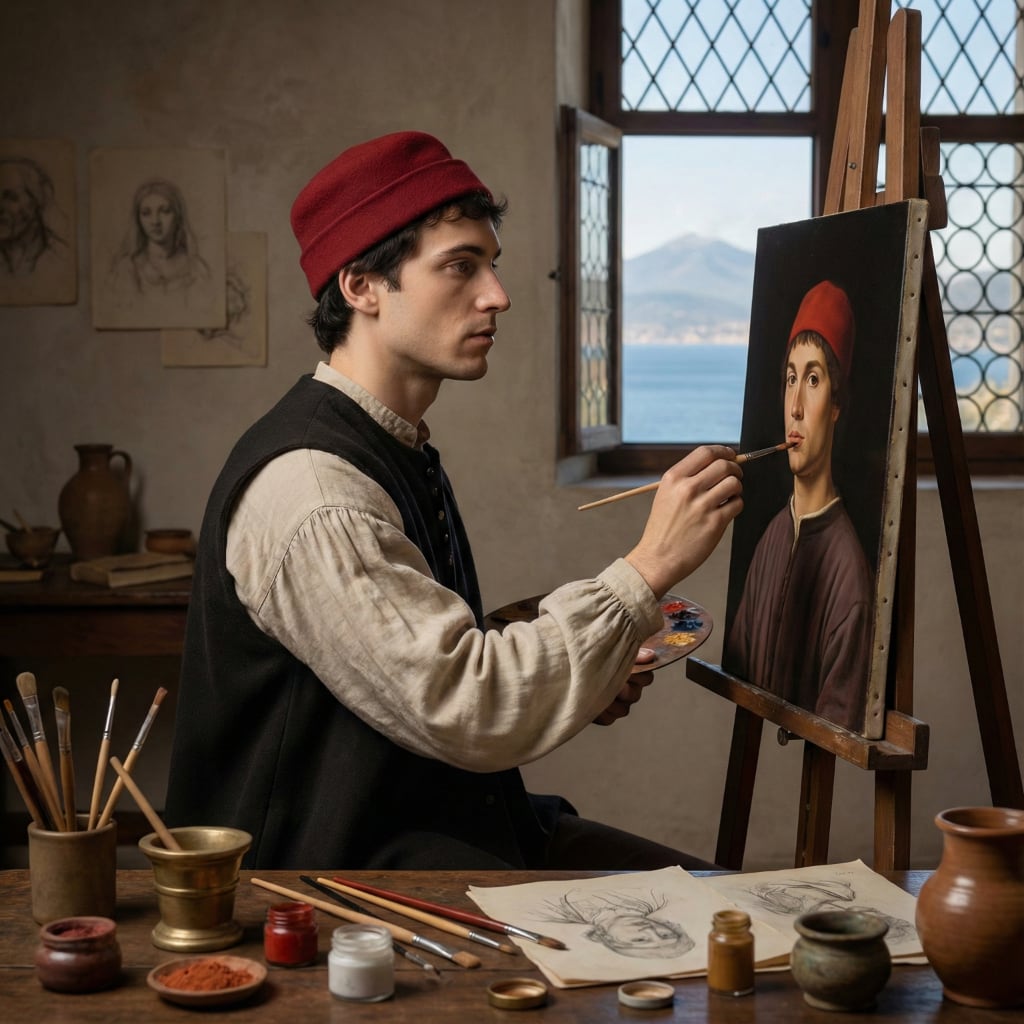
Antonello da Messina.
Antonello da Messina, a true metaphor of the world, was the artist who transformed European painting by uniting Flemish precision with Italian Renaissance harmony and by introducing oil painting to Italy. Born in Messina in 1430, he absorbed the cultural currents of Naples, Rome, and Venice, mastering light, space, and human expression with an intensity that anticipated the art of the following century. His Madonnas, Crucifixions, Ecce Homo and portraits reveal a revolutionary vision in which emotion, realism, and spiritual depth coexist in perfect balance. Deeply tied to his homeland, Antonello often placed Messina itself within his works, from the natural harbor and the sickle-shaped peninsula to its churches, walls, and surrounding seas, turning the city into a silent yet powerful presence on the canvas. His masterpiece, the Annunciata, captures an eternal moment of grace inspired by a woman of Messina, while his final works reflect a farewell both intimate and universal. Returning to his native city to die in 1479, Antonello left behind an artistic legacy that still speaks to travelers today, inviting them to discover Messina not only as a place on the map, but as a timeless source of beauty, light, and creative genius.
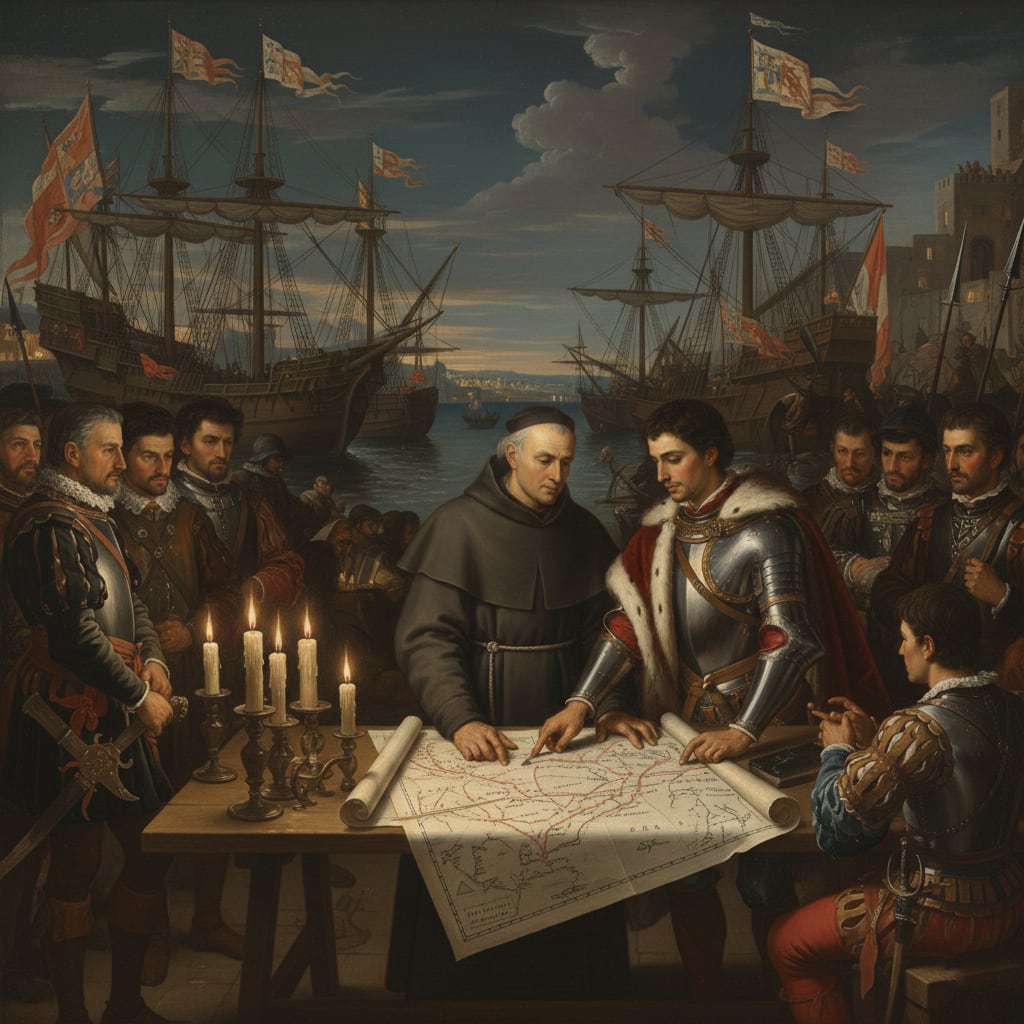
Francesco Maurolico.
Francesco Maurolico, known as the Archimedes of Messina, was one of the greatest minds of the Renaissance, a universal scholar whose genius attracted visitors from distant lands eager to hear and learn from him. Born in Messina in 1494, he excelled in mathematics, geometry, astronomy, optics, mechanics, music, and the natural sciences, embodying the spirit of a city where knowledge met the sea. Priest, teacher, inventor, and author of an extraordinary body of works, Maurolico designed scientific instruments, explored the mysteries of light and motion, and expanded the legacy of the ancient masters, from Archimedes to Apollonius. His brilliance was so enduring that a vast lunar crater was named in his honor, linking Messina to the heavens themselves. Deeply involved in the life of his city, Maurolico contributed to Messina’s fortifications, celebrated imperial triumphs, and wrote the poetic inscriptions that still adorn its monumental fountains. At his death in 1575, legend tells of comets and ancient trees bowing in homage, sealing the bond between this remarkable man and his homeland. Today, Maurolico stands as a symbol of Messina’s intellectual splendor, inviting travelers to discover a city that has shaped minds capable of measuring both the Earth and the stars.
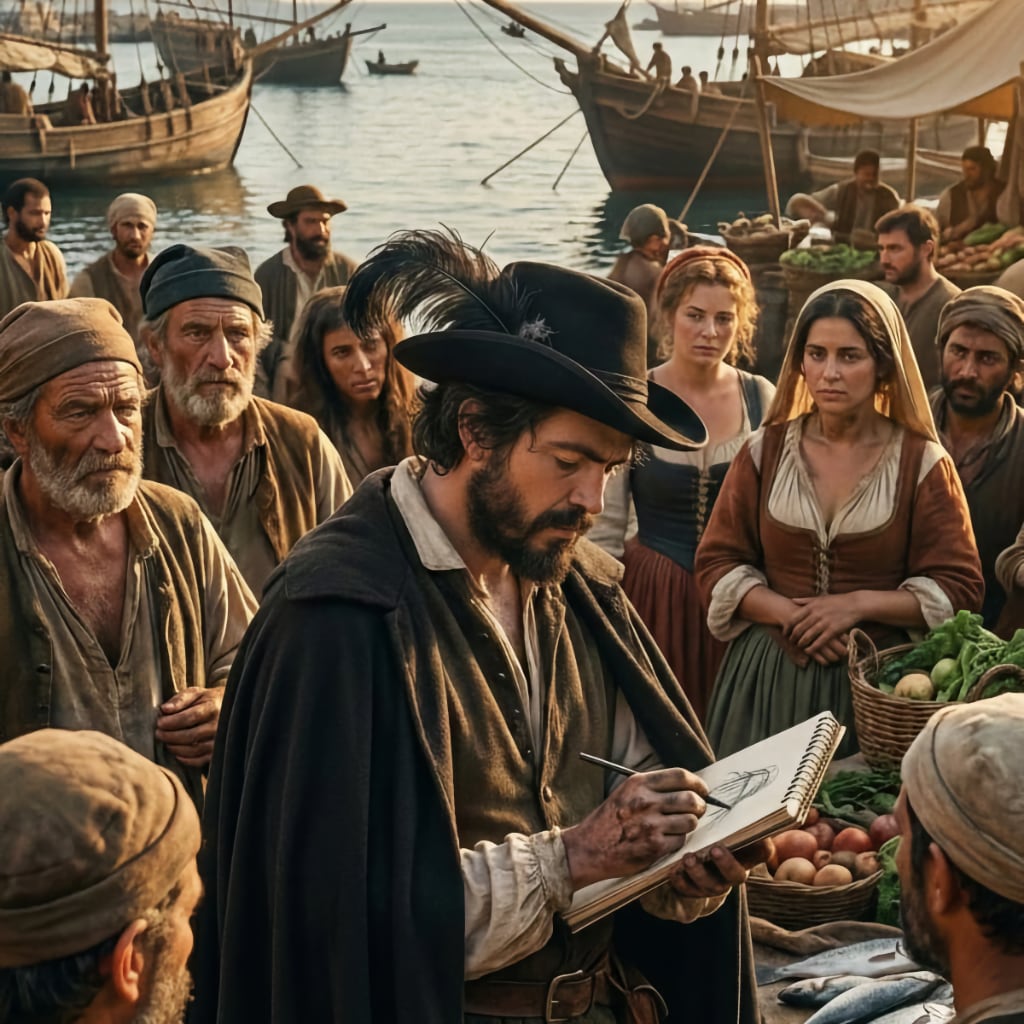
Caravaggio
The artist who shattered sacred iconography, found in Messina one of the most intense and dramatic moments of his life and art. Arriving in the city in December 1608 as a fugitive, hunted and restless, he carried with him fear, violence, and a revolutionary vision of painting grounded in raw truth and stark contrasts of light and shadow. In Messina, the Senate entrusted him with a prestigious commission that gave birth to monumental masterpieces such as the Resurrection of Lazarus and the Adoration of the Shepherds, works in which the sacred is stripped of all idealization and returned to humanity, poverty, and suffering. Faces are those of ordinary people, spaces are dark and bare, and the divine emerges from silence rather than splendor, mirroring the tense, nocturnal atmosphere of the city itself. Though his stay was brief, Caravaggio left an indelible mark on Messina, inspiring local artists and transforming the course of Sicilian painting. Soon after leaving, his destiny rushed toward its tragic end, but in Messina his “dark light” reached one of its most powerful expressions, making the city not just a witness, but a true accomplice in one of the greatest revolutions in the history of art.
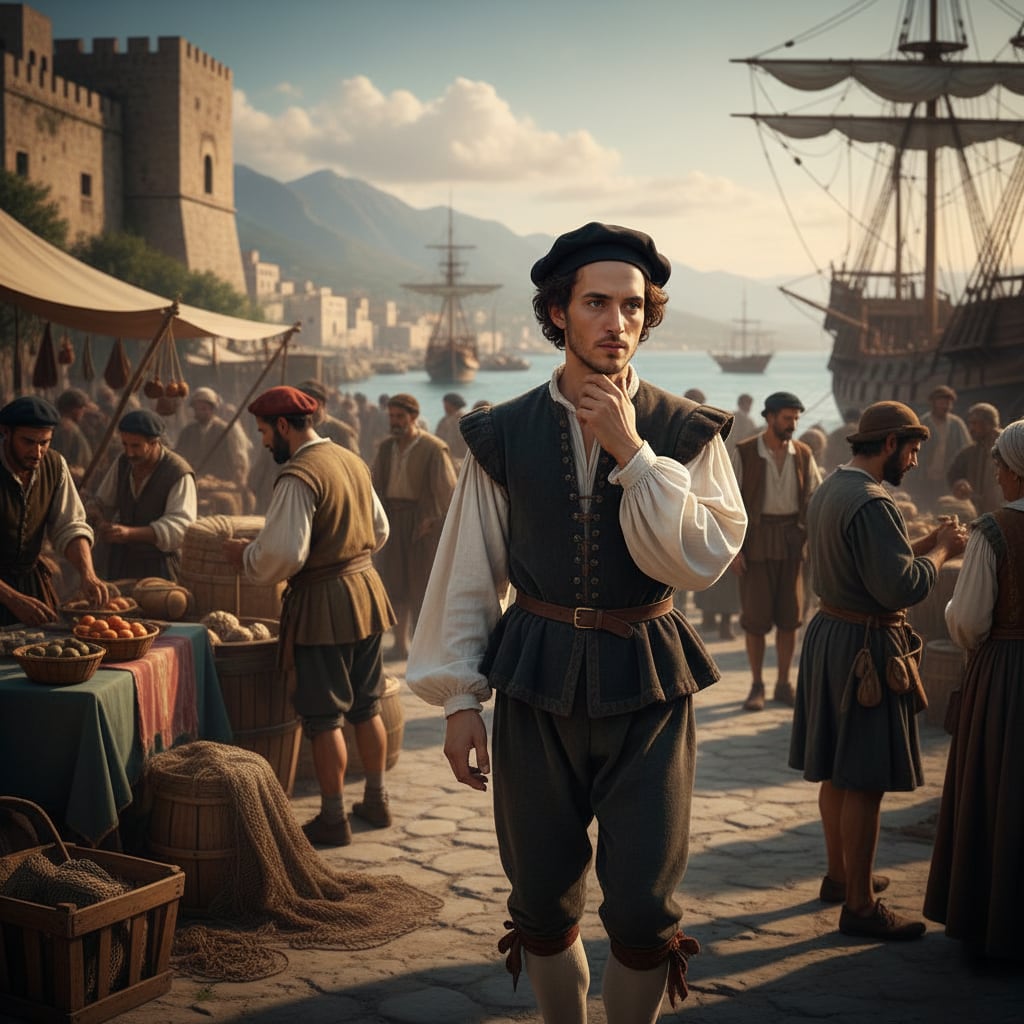
William Shakespeare, the Bard of the Strait.
He lives in Messina through a timeless legend woven into the city’s collective memory. History leaves gaps in his early life, unrecorded journeys and missing years, and it is within these silences that local tradition places the young playwright in Messina at the end of the sixteenth century, arriving by chance after a storm forced his ship into one of the Mediterranean’s most vibrant ports. Surrounded by merchants, sailors, and voices from distant lands, he is said to have discovered a living stage where daily life unfolded like theater, filled with rivalries, romances, whispered intrigues, and sudden passions. According to folklore, he stayed near the Loggia of the Nobles, listening to sea captains’ tales, observing gestures and words, wandering along the harbor and the sickle-shaped peninsula of San Raineri, captivated by the light, the breeze, and the rhythm of the Strait. These impressions, the legend says, resurfaced years later in his work, transforming Messina into a sunlit Mediterranean setting where love and deception, celebration and conflict coexist with effortless grace. Unproven yet enduring, this story remains a poetic thread linking Shakespeare to Messina, inviting travelers to imagine the city not only as a place to visit, but as a stage where great inspiration may once have quietly passed.
Did you know...
that Much Ado About Nothing, one of Shakespeare’s brightest and most spirited comedies, is set in Messina, turning the city into a sunlit stage of wit, love, and intrigue. Local tradition suggests that some characters were inspired by people the playwright may have met here, with Benedick echoing the sharp humor of a young Aragonese naval commander and Beatrice reflecting the charm of the legendary dark-eyed girl. The fast, vibrant rhythm of the dialogue is said to mirror the lively speech of sixteenth-century Messina’s merchants and fishermen, a city alive with voices, exchanges, and theatrical energy. None of this is documented, yet for over two centuries it has fueled the enduring allure of Messina, inviting travelers to experience a place where history, legend, and imagination blend effortlessly.

VisitME Messina
Tourism Brand of the City of Messina. Curated by the Department of Tourism of the City of Messina.