
The Flavors and Tradition of the Strait
A journey between sweet and savory. Where Sicilian tradition meets Greek, Arab, and Spanish influences.
Discover why food is culture in Messina.
THE HISTORY OF OUR CUISINE
Messina cuisine is one of the oldest and most original in Sicily. From the expertise of master pastry chefs, who created pignolata for Spanish nobles, to the hands of farmers who kneaded focaccia with escarole.
Every bite tells a story of traditions, sea, and land.
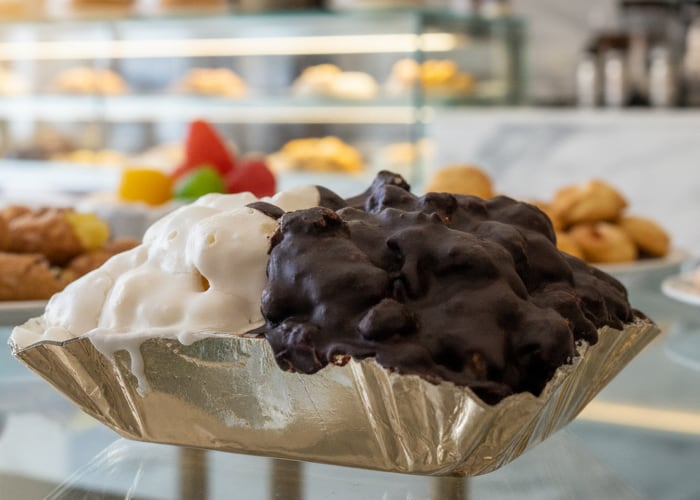
The Pignolata
Small gnocchi fried to perfection and gently coated in a vanilla and cocoa glaze. Pignolata messinese is probably the most iconic dessert in the pastry tradition of the city on the Strait. Sweet and unique, it can only be found in our region, and anyone who comes to Messina must try one of the most unique desserts in the Mediterranean.
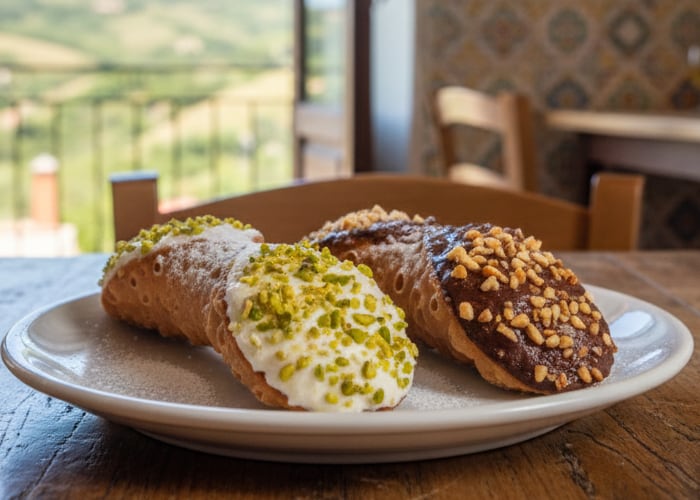
The Cannolo Messinese
The Messina version of the famous Sicilian Cannolo is probably the most sought-after by visitors to our region. A crispy shell envelops a filling of ricotta cheese, finely prepared by master pastry chefs from the Strait, and then decorated with chopped pistachios or hazelnuts. You can also find a dark version of the cannolo with a cream filling made from the finest chocolate.
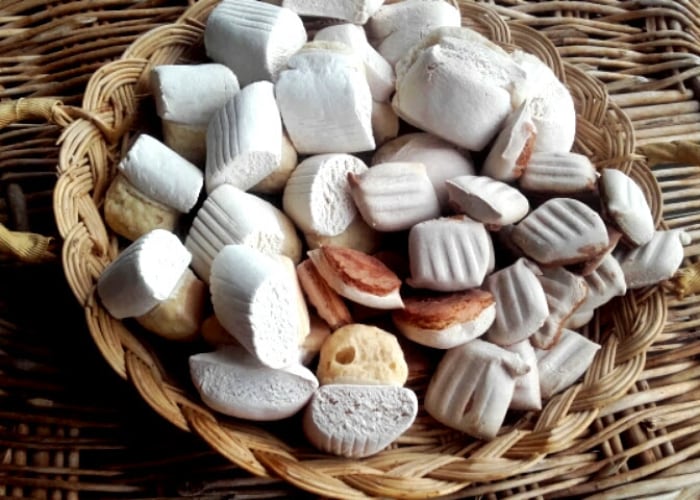
Scardellini or "Morticini"
A typical Messina dessert, simple but equally unique. You can find it during the All Souls' Day celebrations in bakeries throughout the city of Messina. Water, flour, sugar, and a few flavorings are the ingredients of Scardellino, which, when baked at the right temperature, creates magic. From a simple cookie, the dough gives life to two sides of the same delicacy.
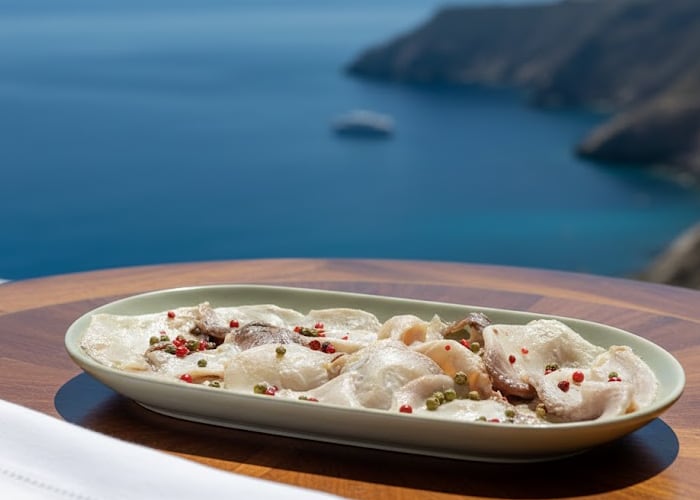
Swordfish Carpaccio
Sicilian swordfish carpaccio is a delicious appetizer that is perfect for starting a fish-based lunch. It consists of thin slices (maximum 2 mm) of raw swordfish marinated in lemon juice. Extra virgin olive oil, salt, chopped parsley, and a sprinkling of pepper complete this typical Messina dish, which you will find in all our restaurants.
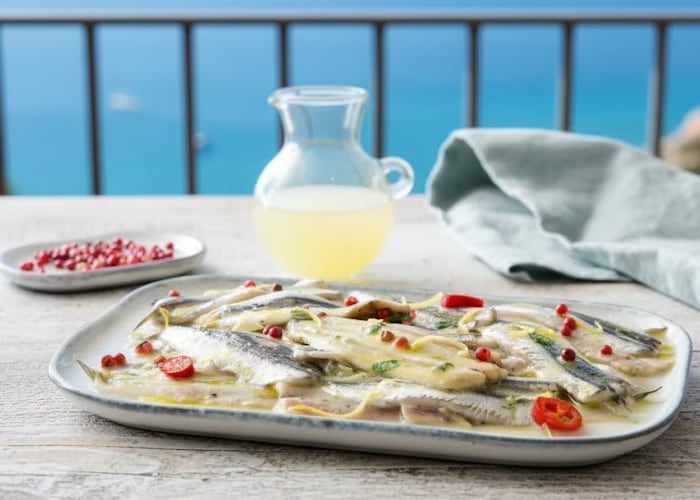
Marinated Anchovies
Marinated anchovies are served as an appetizer with a characteristic intense and sour marinade flavor. After cleaning the anchovies, removing the heads and central bones, marinate them with oil, salt, pepper, and lemon. Let the dish rest at room temperature covered with plastic wrap for at least 5 hours. Remove the marinade and season with a little white vinegar.
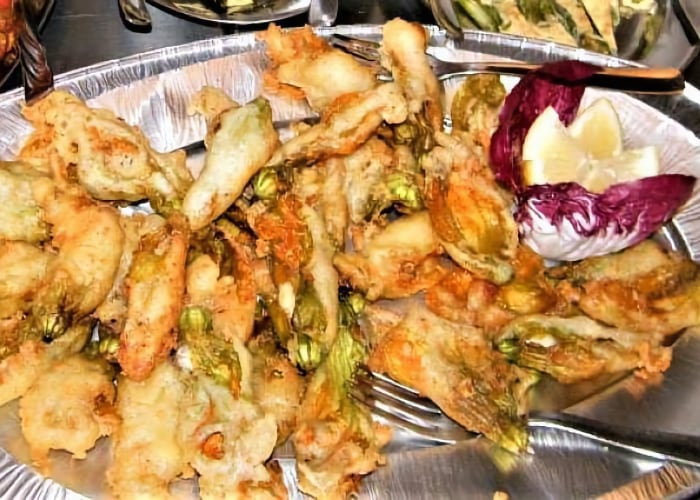
Crispedde, zucchini flowers
"Crispedde" (fritters) made from zucchini flowers are a tasty appetizer typical of Messina and popular throughout Sicily. After removing the stems and washing the flowers, chop them coarsely. Mix them with beaten eggs in a bowl together with pecorino cheese, salt, pepper, and flour. Finally, fry spoonfuls of the mixture in a pan with extra virgin olive oil to form the “crispedde.”
The Arancino Messinese
The Golden Cone that made history
In Messina, you will find the undisputed king of Sicilian street food. Fine rice cooked with saffron, seasoned with a traditional ragù sauce that encapsulates all the flavors of the Messina region. All wrapped up in a golden breadcrumb coating that preserves its fragrance and unique flavor.
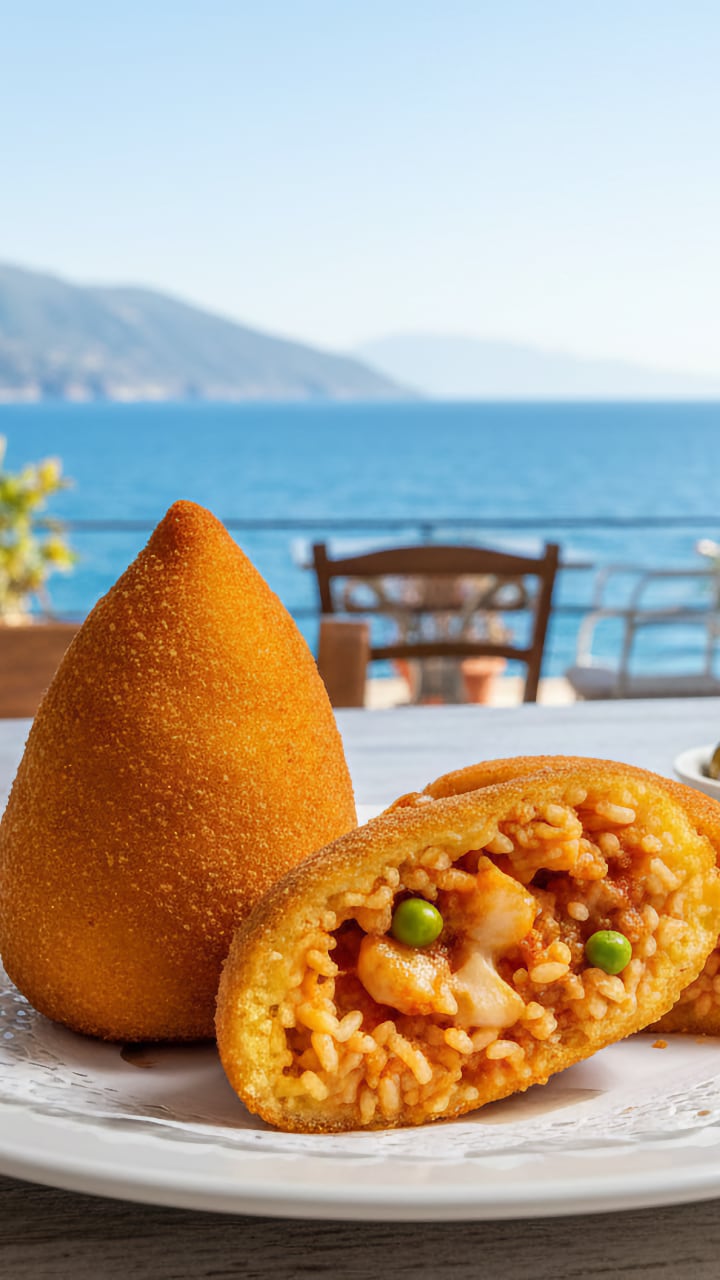
The Arancino Messinese
The Golden Cone that made history
In Messina, you will find the undisputed king of Sicilian street food. Fine rice cooked with saffron, seasoned with a traditional ragù sauce that encapsulates all the flavors of the Messina region. All wrapped up in a golden breadcrumb coating that preserves its fragrance and unique flavor.
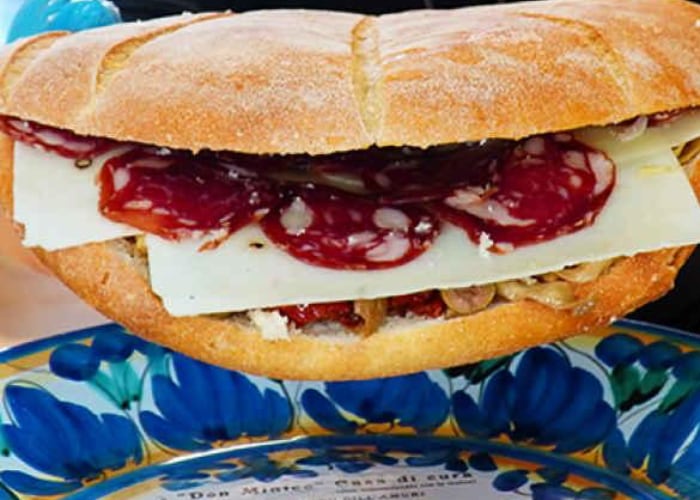
The Bread Cunzatu
Messina's traditions are not limited to fish and desserts. In our hills, you will find ancient flavors and customs handed down over the centuries, including the ancient recipe for “Pane Cunzatuu.” This fragrant homemade loaf is baked in a wood-fired oven and embodies the ancient flavors of the Messina area. Enjoy it while walking in the San Rizzo hills, surrounded by mountain air and the breathtaking landscape of the Strait.
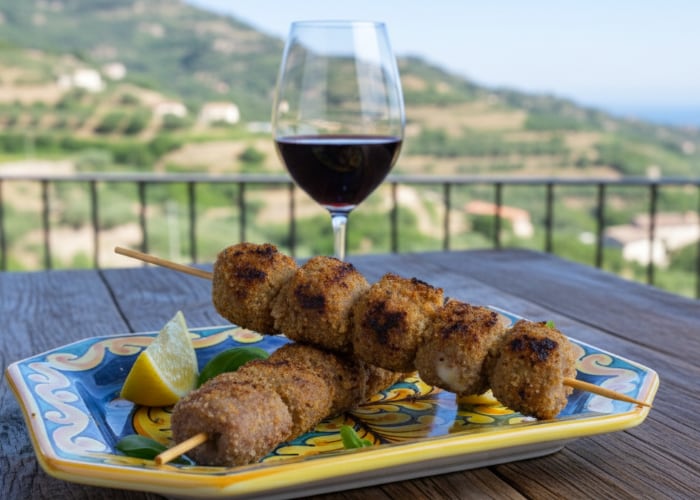
The Messinian “Braciole”
Meat rolls expertly wrapped around breadcrumbs seasoned with cheese, parsley, salt, and pepper. This meat delicacy can only be found in Messina. An ancient recipe handed down by our ancestors, who spent their Sundays wrapping the “braciole” one by one. Even today, each Braciola is prepared by hand, just as our grandmothers did.
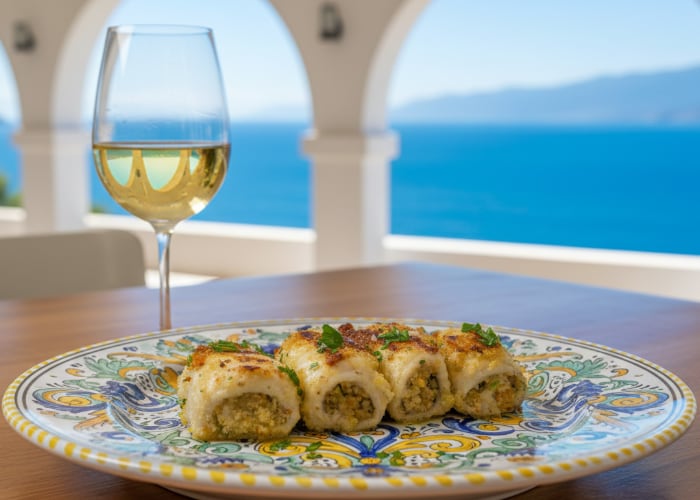
Swordfish “Braciole”
The seafood version of Messina's “Braciole” are swordfish rolls. A typical dish from the Strait of Messina that embodies tradition and the flavors of the sea. A delicate taste enclosed in a thin slice of swordfish. Inside you will find breadcrumbs with parsley, salt, and pepper. All seasoned with a drizzle of extra virgin olive oil and chopped parsley. The delight of the Strait.
The Company of Bacchus
The D.O.C. wine of the Messina tradition
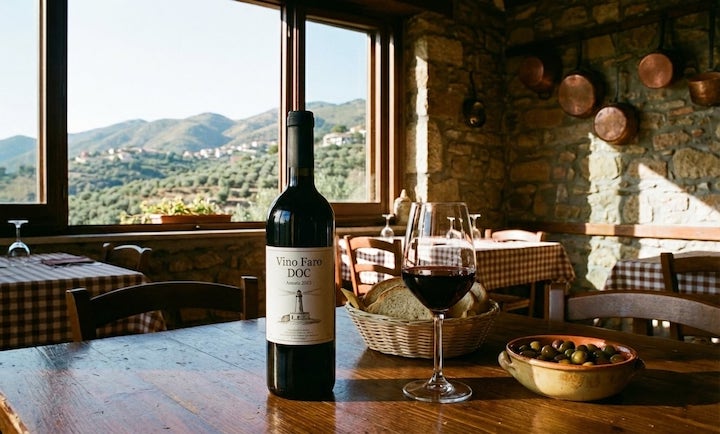
Faro Wine D.O.C.
This red wine, which takes its name either from Punta Faro at the extremity of Capo Peloro or from the Pharii, the first Mycenaean colonists who arrived here in 1300 BC, is produced exclusively within the Municipality of Messina.
Strabo (before 60 BC – between 21 and 24 AD), the Greek geographer, historian, and philosopher, states in his Geography: “Quunque feraissimus vini ager ipse sit, vinum ipsum no quidem Messinium, sed Mamertinu nuncupant, quod contra Italica cuncta, e quidem praestissima aemulatione certetu,” which means: although the wine is produced in the extremely fertile territory of Messina, it is not called Messineo but Mamertino in honor of Mars, because its quality competes with all other Italian wines.
Pliny the Elder (23 – 25 August or 25 October 79 AD), a writer and naturalist, classifies the wine from Messina among the best in his Naturalis historia, recommending it as suitable for banquets.
In 1631, Mario Pace, in L’Antichità di Caltagirone, città gratissima della Sicilia, mentions Faro wine. In 1658, Placido Reina, in his Delle notizie istoriche della Città di Messina, discusses the wine of Messina, citing Atheneus, Pliny, and Martial as historical sources, adding: “Especially since even today, the wines of that area maintain a most commendable value among all others in Sicily.”
In 1880, Faro wine was exported to France, where it was used to “cut” Burgundy and Bordeaux wines.
The grape varieties permitted for its production are Nerello Mascalese (from a minimum of 45% up to 60%), Nerello Cappuccio (15% to 30%), and Nocera (5% to 10%).
It has a brilliant ruby red color tending towards brick red with aging, a delicate and persistent aroma, and a dry and harmonious flavor. It pairs well with roasts and red meats, game, and aged cheeses.
Faro wine was one of the first Sicilian D.O.C. (Denomination of Controlled Origin) wines, recognized in 1976.
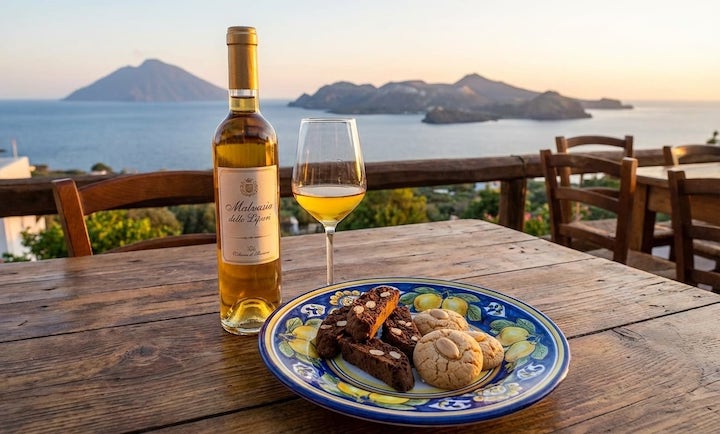
Malvasie of the Lipari D.O.C.
The earliest known record of Malvasia delle Lipari is attributed to Diodorus Siculus (Agira, c. 90 BC – c. 27 BC), a Sicilian Greek historian and author of the universal history Bibliotheca historica. According to the historian, the presence of the Malvasia grape in the Aeolian Islands dates back to the 6th century BC. Indeed, it is a grape variety exclusive to the Aeolian Islands and particularly widespread on the island of Salina.
One of the first written accounts of winemaking in the Aeolian Islands comes from Andrea Bacci, who, in his De naturali vinorum historia de vinis italiae et de convivijs antiquorum libri septem (1596), states that “…the island of Lipari is dotted with fertile hills, which, due to the internal heat of the soil, yield a genuine wine…”.
In 1890, the French writer, playwright, essayist, and poet Guy de Maupassant, in his La vie errante (The Wandering Life), wrote about the wine from the island of Salina: “…as I was returning, I had discovered from the boat an island hidden behind Lipari. The boatman called it Salina. The Malvasia wine is produced there. I wanted to drink… a bottle of the celebrated wine… It truly is the wine of the Volcanoes, dense, sweet, golden…”.
In 1900, Malvasia delle Lipari was presented and awarded at the Paris Exposition, and in 1933, at the first “Exhibition of Typical Wines of Siena,” where it was described as having an “exquisite aroma.”
The grape varieties permitted for its production are Malvasia di Lipari (maximum 95%) and Corinto nero (5% to 8%).
It has a golden yellow or amber color, an aromatic scent, and a sweet and aromatic flavor. It pairs well with Sicilian desserts such as cassata, cannoli, dry pastries, and piparelli.
Also produced in the Malvasia delle Lipari Passito (raisin wine) and Malvasia delle Lipari Liquoroso (fortified wine) variants, the Malvasia delle Lipari D.O.C. wine achieved the Denomination of Controlled Origin recognition on September 20, 1973.

Mamertino D.O.C. Wine
It was in Sicily that the Greeks learned to pair their dishes with the prestigious Mamertino, a wine from Messina described by Athenaeus of Naucratis—a Greek scholar of the 2nd-3rd century—as: “...though produced in Sicily, it is called Italiot. It is sweet, light, and vigorous.” In his 1658 book, “Historical Records of the City of Messina,” Placido Reina cites Athenaeus, writing: “To these must be added the excellence of Mamertino wine, ranked fourth among the most exquisite wines sought after for the magnificent tables of the Roman Emperors.”
Pliny the Elder, in his “De Rerum Natura,” ranked Mamertino fourth in his list of 195 premium wines (1st century AD). Julius Caesar also mentions “Mamertinum” in his “De Bello Gallico,” noting that it was served at a grand banquet to celebrate his third consulate. As far back as 289 BC, the Mamertines (followers of Mars) settled in Messina—which they named Mamertina—and began planting a vine variety in the Messina territory, particularly on the hills of Milazzo, capable of producing a wine that was “warm, generous, and comforting.”
Today, the production of Mamertino encompasses 34 municipalities within the Metropolitan City of Messina and was officially granted D.O.C. (Controlled Designation of Origin) status in 2004.

VisitME Messina
Brand Turistico della Città di Messina. A cura dell'Assessorato al Turismo della Città di Messina.